
By: Kaydence Kempthorne
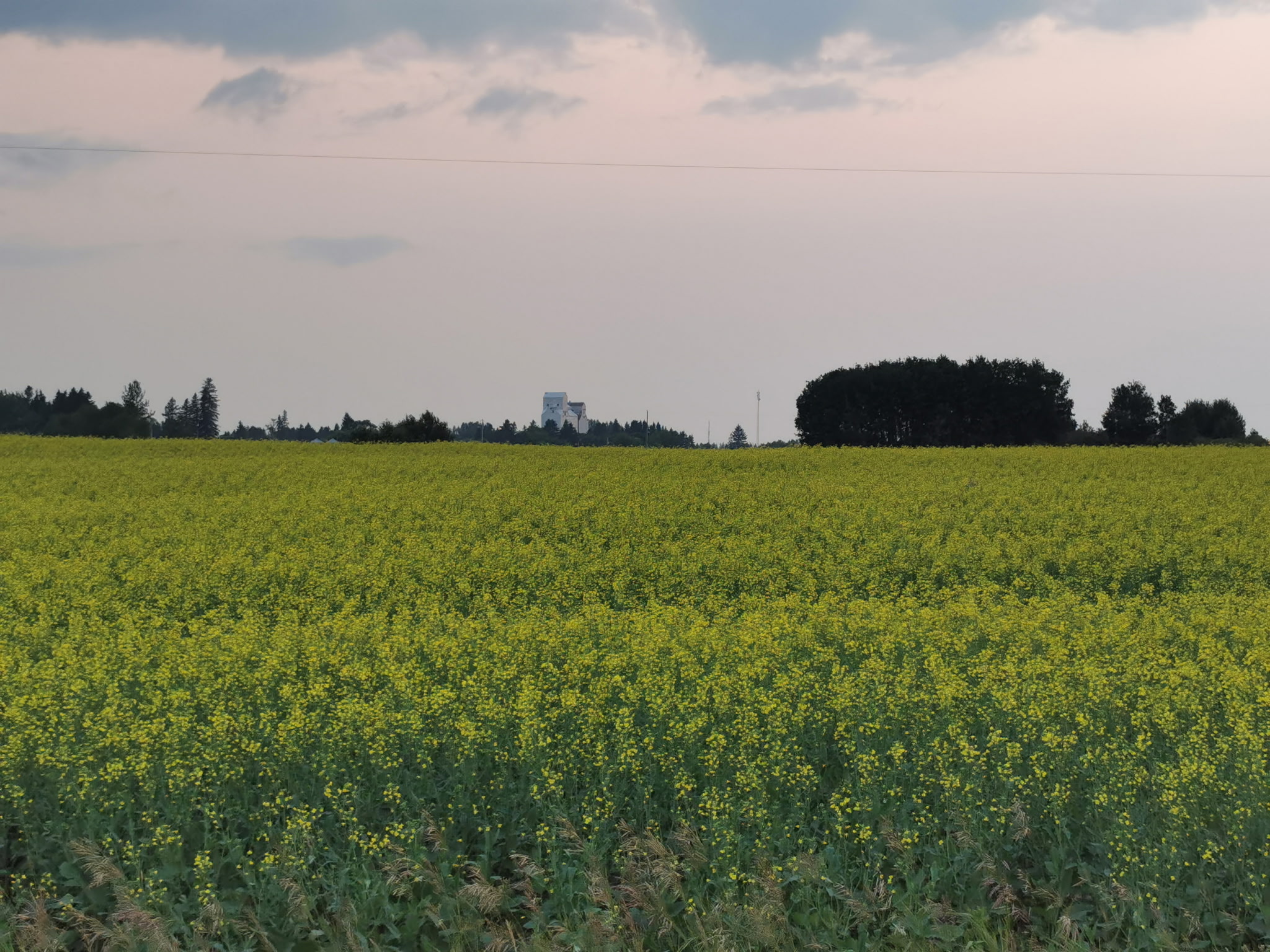
Kevin Popp, a farmer in MacNutt, has been in the business of agriculture since he was fifteen years old. His crops are both canola and wheat. The wheat, if the quality is good, Kevin sells for milling purposes, to be used for flour and bread.
Over the years, Kevin has learned that a farmer can lose more money over excessive moisture than over a drought.
“This year was especially bad because we were very wet in the fall, and very wet with the snow melt, so this last rain really kicked us.”
Out of his productive acres, Kevin estimates a 10% loss to excess moisture this year. This is a considerable amount when $500 an acre has been invested. Another 10%, Kevin says, was too wet to plant, due to a lack of oxygen in the soil.
“The plants can’t live in an anaerobic situation, where there is no oxygen,” Kevin explains. “The soil needs oxygen, or anything growing there will die.”
Another estimated 5% of the land experienced either erosion, meaning that the plants were simply washed away, or salinity, meaning that the plants were choked out by the minerals in the soil.
“I estimate a quarter of my revenues will be lost,” Kevin says, “and that just doesn’t come back.”
Statistics prove that, as a farmer, Kevin controls approximately 33% of the outcome of his crop, based on his own management. The other 67% is based on what happens in terms of weather.
“I think the challenge this year will be that even if a farmer can grow a crop, the ability to do so is in the good Lord’s hands as far as weather.” Kevin goes on to say, “I can only decide how to manage my costs, my timing, my investments, and my marketing. In the end, the better manager will be in a better position.”
Some people have said that the farmers’ attempt to drain their land has been one of the leading causes for water coming into towns and houses, but, due to the elevation level of the land, that is not the case.
“The fact is, if you fill a bathtub, it has to run over somewhere. That’s just the way it is.”
What Kevin and other farmers will have to do this fall is make sure that their reservoirs are empty so that the water has an orderly way to exit. This will save the soil, protect infrastructures, and prevent neighbors from getting flooded out as well.
“It’s our job to figure out a way for the water to find a way to the river in an orderly fashion, and without finding an alternate route.”
Despite the damages done to his land, Kevin remains hopeful.
“We were actually really fortunate despite the impact we felt,” he says. “We got only a small amount of rain compared with what people got further North. They got about twice as much.”
And despite the many setbacks he has had to face in the past, and those he will have to face in the future, the passion of being a farmer still runs deep inside of Kevin Popp.
“My objective is to always leave the land in better condition than when you got it. When the next person takes this land on, I hope I’m leaving it in better condition than when I picked it up.”