
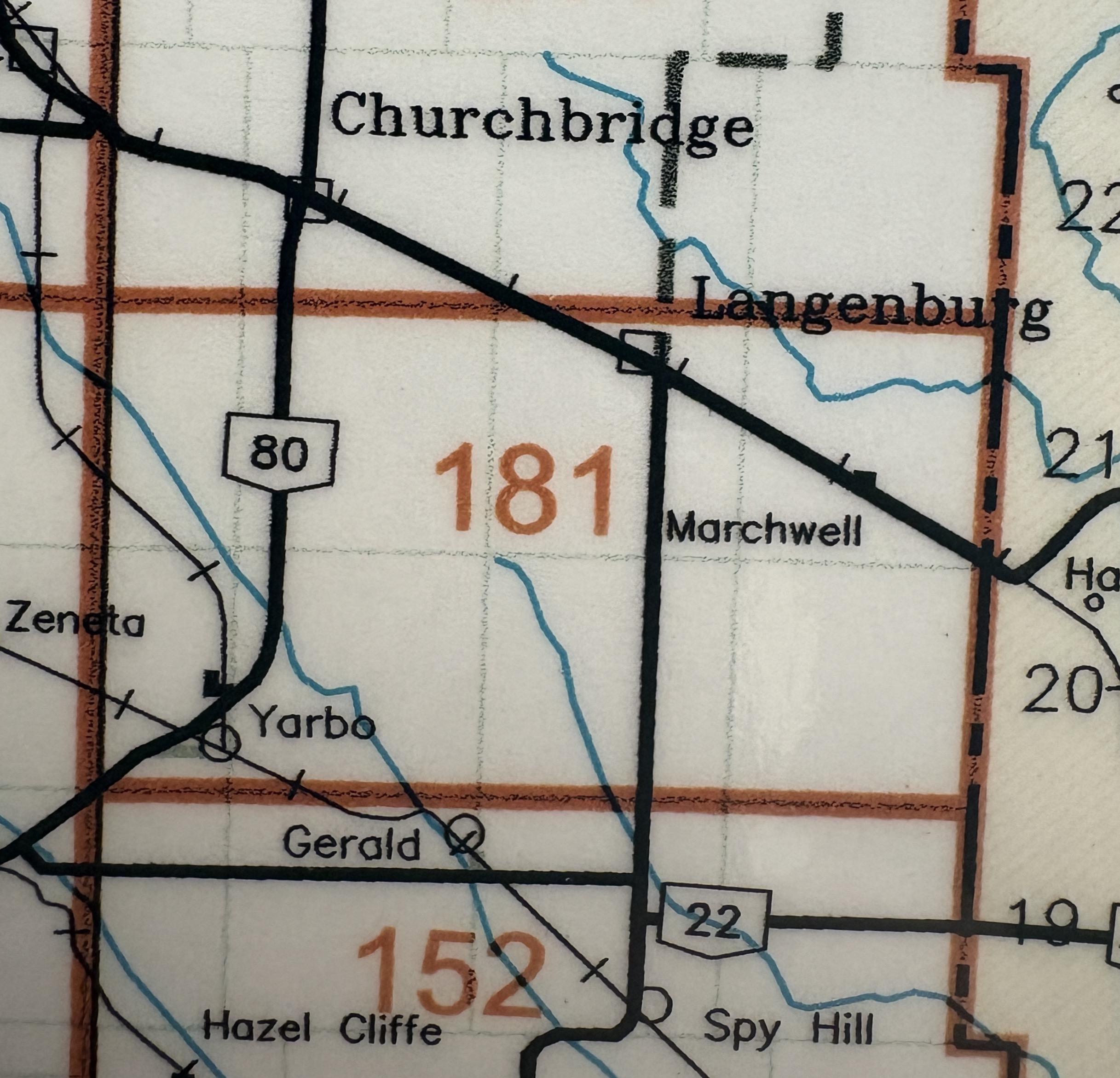
The Village of Yarbo became part of the Rural Municipality of Langenburg No. 181, following months of discussion involving local governments and the provincial Ministry of Government Relations.
While the Town of Esterhazy had considered absorbing the small community, council ultimately voted against the move after raising concerns about legislation and a lack of clear information from the provincial government.
The restructuring will see Yarbo transition into a Special Service Area (SSA) under the RM of Langenburg, allowing the municipality to administer services while maintaining a separate tax structure for the community.
However, RM officials say the process has exposed deeper issues with provincial policy surrounding struggling villages across Saskatchewan.
Village Faced Governance Challenges
According to RM of Langenburg Reeve Terry Hildebrandt, the municipality was first approached by Yarbo representatives in 2024 after the village faced difficulties maintaining its local government.
“They had applied to become part of the RM for two reasons,” Hildebrandt said in an interview. “They couldn’t find people to govern their village anymore, and their administrator wanted to retire.”
Hildebrandt said the RM initially encouraged the village to try to maintain its own governance, noting that Yarbo had invested in infrastructure upgrades, including reverse-osmosis water systems supported in part by nearby potash operations.
Still, the village’s governance challenges eventually led to the restructuring process now underway.
Esterhazy Considered but Declined
At one point, officials suggested Yarbo might be better integrated into the Town of Esterhazy because of strong community ties.
Residents of Yarbo often shop, attend church, and send their children to school in Esterhazy, Hildebrandt said, making it a logical fit geographically and socially.
But the town ultimately declined to proceed with the proposal.
One of the main challenges was the absence of legislation allowing Communities in Transition (CIT) funding to apply to a restructuring from one urban municipality to another.
“That was their biggest concern,” Hildebrandt said. “They couldn’t get enough information out of government officials about how the funding and responsibilities would work.”
Following Esterhazy’s decision, the restructuring defaulted back to the RM of Langenburg under provisions of The Municipalities Act, which typically places a village under the rural municipality it is located within.
RM Raises Concerns With Province
Despite accepting the restructuring, the RM of Langenburg has been openly critical of the province’s approach to dissolving villages.
In a letter sent to Yarbo residents, Hildebrandt said the RM council believes the provincial government is increasingly shifting responsibility for villages onto rural municipalities.
“The RM Council believes the provincial government is offloading its responsibilities for villages onto rural municipalities,” the letter states.
Over 300 villages across Saskatchewan with declining populations could be facing non-compliance issues related to governance, finances, or administration, according to Hildebrandt.
He argues the current approach does not adequately address the infrastructure and environmental liabilities that may exist in aging communities.
“These include derelict buildings, buried fuel tanks, abandoned garbage dumps, and similar concerns,” he wrote.
Call for Policy Reform
The RM is now seeking broader policy changes through the Saskatchewan Association of Rural Municipalities (SARM).
At the 2026 SARM Annual Convention, the RM of Langenburg introduced a resolution calling on the provincial government to freeze all ministerial restructuring orders until a full review of municipal viability across Saskatchewan is completed. The resolution passed during the SARM convention by an overwhelming majority of over 98% in favour.
The resolution also asks the province to retain responsibility for environmental liabilities and major infrastructure costs associated with villages.
Hildebrandt argues small communities simply do not have the tax base required to sustain modern infrastructure.
Essential Services to Continue
Despite the policy disagreements, the RM says it will ensure services in Yarbo continue without interruption.
Water system operations, garbage collection, firefighting, administration services and snow removal will remain in place as the community transitions into a Special Service Area.
Growing Issue Across Rural Saskatchewan
Hildebrandt believes the restructuring of villages will become increasingly common as populations decline and fewer residents step forward to serve on local councils.
Many rural municipalities are already struggling to fill council seats, he said.
“This is just a band-aid,” Hildebrandt said. “Without broader policy changes, in 10 or 15 years these issues will still be there, and rural municipalities will be carrying the burden.”
The RM plans to continue discussions with provincial officials in the coming months while advocating for legislative changes through SARM.
Summary
RM of Langenburg Reeve Terry Hildebrandt says recent provincial policy changes regarding rural municipality restructuring and village transitions came too late to help the Village of Yarbo.
Hildebrandt explained that the province has now doubled transition funding for small villages and allowed more flexibility in how the money can be allocated, including to nearby urban municipalities. However, he believes that if these changes had been in place a few months earlier, residents of Yarbo could have potentially become a Special Service Area (SSA) of Esterhazy, which council felt would have been a better fit for the community.
Council’s position, he said, was never about rejecting Yarbo but about finding the most practical arrangement for its residents.
Hildebrandt noted that many villages facing restructuring will use the increased provincial funding to deal with debt or infrastructure issues. In Yarbo’s case, debt was not the primary concern, but the funding flexibility could still have supported a different governance arrangement.
He also told provincial officials that each village situation should be considered individually rather than applying a one-size-fits-all approach. In his view, when the provincial government must force restructuring through ministerial orders, it signals that municipal policy needs reform.
Hildebrandt added that the broader restructuring of rural communities is a significant issue across Saskatchewan, with many rural leaders worried about the growing responsibilities placed on rural municipalities. He said some municipal officials are reluctant to continue serving if RMs are expected to take on the additional burden of managing struggling villages and their infrastructure.